Monday, 14 August 2017

Blackberry Jam


There’s something deeply satisfying about making blackberry jam.  It might be that (for me) it’s one of the last truly seasonal foods, so it reminds me of those long ago summers when my lovely Nan used to send us out blackberrying for tarts and crumbles.  Back in the 70’s when all summers were wall to wall sunshine and not a drop of rain fell.  Well, not in my memories anyway!

Making jam is so easy, and so straightforward that it seems a shame not to make at least one batch.  There really isn’t anything to it, and it only takes 20 – 30 minutes from start to finish.  The recipe and method below applies to all fruits, those very low in pectin (strawberries and apricots) benefit from the addition of the juice of a lemon.

Prepare by sterilising your jars, I use Milton baby bottle sterilising fluid, and pop a few small plates or saucers in the freezer.

While the jars are sterilising prepare your fruit – the blackberries will have ideally had a good long soak in salt water to draw out any ‘visitors’ and then been rinsed very well to make sure the salt is washed off.

I have found that the actual quantity of jam produced differs according to the fruit used, but 700g of fruit will usually yield somewhere between 3-4 250ml jars of jam.  I sterilise 6 just to be on the safe side.

For every 100g of fruit you use, you need 100g of jam (or preserving) sugar.  The bags are very helpful and tell you which fruits they are best suited to.  I usually use jam sugar.

Pop your rinsed fruit into a pan with the sugar and a drop of water (about a tablespoon or so) and heat slowly until the sugar has dissolved, stirring fairly frequently – you can see when the sugar has dissolved on the back of your wooden spoon and around the sides of the pan.  Once all the sugar has dissolved bring the contents of the pan up to a full rolling boil and time it for 10 minutes, stirring from time to time to stop it catching.  Some jams will come to a ‘set’ quicker than others, those with high pectin set much sooner than low pectin fruits.  You will quickly learn when they are approaching setting point as the juices on the back of your wooden spoon thicken.

To test for a set take the plates out of the freezer and drop a small amount of jam on one, leave it for a few moments and then push with your little finger, it will wrinkle when it is ready.  Then turn out the heat and leave the jam to settle for a few moments while you assemble your jars and funnel ready for filling.

Once filled, tighten the lids of the jars straight away and leave until cool before labelling.

Knitted Cable Tea Cosy


This is a very simple cable pattern, very easy to follow and simple enough for a novice – this was my first attempt at cable and it really and truly is easy!  Because the wool is so very thick it will knit up in no time.

The pattern given is for a square which should suit most sized teapots.  I tucked the corners in to give it a more ‘shaped’ finish.

You will need

1 x 170g ball Lion Brand Wool-Ease Thick and Quick yarn, I used Oatmeal colour.

1 pair of size 9mm needles

1 large chunky button or toggle to decorate

1 cable needle (or broken bit of needle, the pointy end!)

The pattern is a simple six row repeat :

Cast on 24 stitches
Rows 1 and 3 :        K6 p2 k8 p2 k6
Rows 2 and 4 :        k8 p8 k8
Row 5 :                   k6 p2 c4f c4b p2 k6 *
Row 6 :                   as row 2

*c4f - To make the forward cable slip two stitches onto the cable needle and push to the front of the knitting, knit the next two stitches and then knit the two from the cable needle back onto the main needle.  Then, to c4b slip two more stitches onto the cable needle and push to the back of the knitting, knit the next two stitches and then the two from the cable needle back onto the main needle – and this is all there is to it!

Repeat the pattern five times and then cast off.

Sew up the side seams leaving enough of a gap for the handle and spout, sew up the top seams and finish off with a large chunky button, or toggle.

Sunday, 6 August 2017

August - Summer's Swansong


Overlooking Aberaeron, Ceredigion
August is traditionally the high point of summer.  The school holidays are in full swing, and the annual summer getaway imminent.  Sadly, in recent years August seems to have been one of the wettest months of summer, a bitter blow for staycationers. 

The annual blackberry harvest is a daily occurrence now.  With other soft fruits and berries they make a lovely compote; or they can be stockpiled in the freezer for some much-needed comforting crumbles once autumn hits.  My neighbour freezes them as she picks them and then makes batches of jam once she has enough. 

This is the best time to make chutneys, with the fruits at their prime and weather conducive to having every door and window flung open to try and minimise the smell of cooking vinegar in the house!  From my experience, it still takes two or three days to get rid of the smell, but it’s so worth it when you open that first jar and are reminded of the happy summer harvesting. 

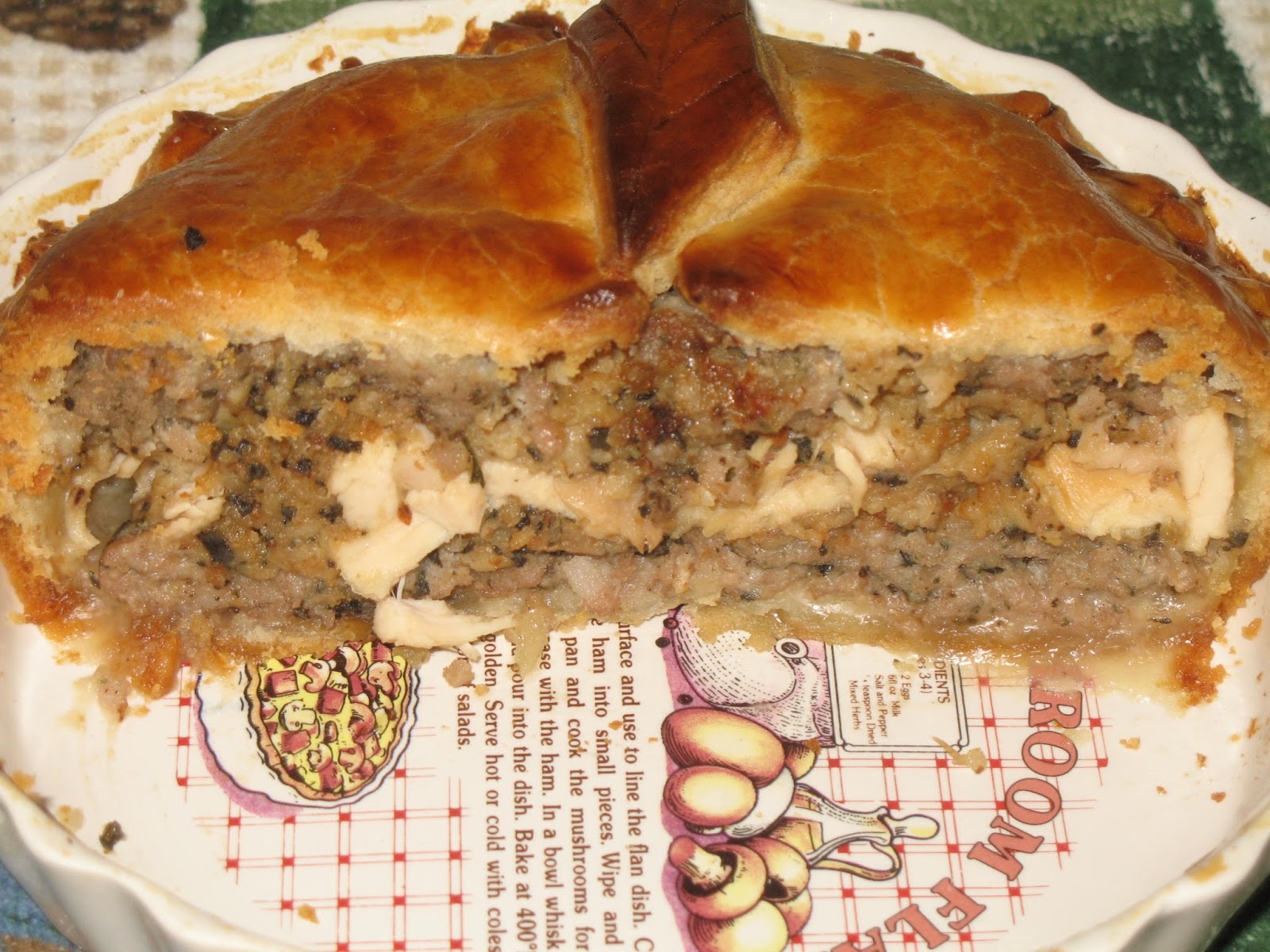
August food is usually quickly assembled salads, quick cook pasta dishes and picnic food for beach visits or to take to whichever cottage we’ve rented for our holiday.  I don’t travel lightly where food is concerned – never knowingly under-catered is my motto!  One of my favourite picnic pies, aside from good old Corned Beef Pie, is a nice sausagemeat and chicken pie, with an added layer of sage and onion stuffing this is a lovely treat.  I usually make it with whatever bits and pieces of leftover cooked chicken and stuffing I have stashed in the freezer.  Its a very filling pie so all it needs is a bit of salad on the side.

One of my often-repeated summery pasta dishes is linguini with bacon, garlic oil and chilli.  I make it year-round, but somehow it seems so much nicer in the summer months – doesn’t everything though!  It’s not quite an assembly-job, but only needs a bit of bacon cooking while the pasta boils so it’s a very low-effort meal. 

At the homestead, it’s really little more than a tidying and sorting month.  Organising clothes, food and other essentials for the holiday, organising my jars and ingredients for the great chutney-off! 

By the end of this month it’ll all be done and dusted and we’ll have come full circle to autumn and it all starts over again!


Sunday, 16 July 2017

July - High Summer


Summer time, and the living is easy!  It really is easy since I’ve practically moved outside permanently now!  It offends me to be stuck indoors when the weather’s nice.  Drifting outside with a cup of tea turns into taking meals outside, which turn into endless hours spent pottering in the garden, drifting around pulling the odd weed, dead-heading roses and fuschias, monitoring bees ....  The responsibilities are endless!

My windows are permanently flung wide open, ditto the front and back doors to maximise airflow in an attempt to cool my house.  July can often be unbearably hot and humid, which makes sleeping a near impossibility since it only really cools down in the early hours of the morning.  Poor Holly struggles so badly in this weather and is a very droopy companion.  Our walks are severely truncated affairs now, a 10 minute sniff, meet and greet twice a day is about all we manage, unless we can hit the beach or find a nice river to cool her off in.

Tapenade Stuffed Chicken
In the kitchen, July eating is pretty much a succession of barbecues and salads, with the odd bit of ‘proper’ cooking thrown in when the weather permits.  A perennial favourite is tapenade stuffed chicken.  The tapenade itself is a fantastic standby and can be slathered onto bread or dollopped into cooked linguini for a speedy meal.

Another old favourite is barely classed as cooking – you simply need to boil a pan of pasta
Linguini with parma ham, rocket & chilli

for 10 minutes while you prepare the rest of the ingredients!  Linguini with parma ham, rocket and chilli.  This is absolutely delicious enjoyed in a sunny garden after an unbearably long day deskbound!  Sometimes gratification is pretty much instant.

As July progresses my thoughts start to turn to preserving – jams and chutneys.  I start scouring the hedgerows on walks for signs of the early blackberries ready to swoop as soon as they ripen.  I’m often found gazing up at threes on walks too, watching for the cobnuts so that I can start gathering them as soon as they ripen at the end of August/beginning of September – assuming that I can get to them before the squirrels do!


Thursday, 29 June 2017

Bluberry and Banana Dog 'Ice Cream'


I made these treats recently for my dog during a four-day heatwave that broke a forty-year temperature record and almost brought the UK to a standstill.  We do emergencies terribly well in the UK, not so much extremes of weather!


You just need :

500g pot of plain yoghurt (I used Total 0% fat because that’s what I always buy)

200g blueberries (about a cup)

1 banana


Pop everything into a blender and blitz, or pop into a batter jug and blitz with a stick blender.  Pour into silicone cupcake cases and pop into the freezer.  Once the ‘cupcakes’ have frozen they can be tipped into a freezer bag for easier storage.

This works very well poured into a Kong, just make sure to wrap it in cling film first (leaving the top open of course!).


Wednesday, 28 June 2017

Lamb Steaks baked with Baby Potatoes and Lemon


Welsh salt marsh lamb is the only meat that beats Welsh mountain lamb in my humble opinion!  It’s a delicious meat which works very well with samphire, as the animals graze on and alongside it on the salt marshes of West Wales.

It would be a travesty to cook such a lovely meat in a rich gravy or sauce, it really needs the lightest hand to bring out the best of its flavour.

Quantities depend on the numbers you are cooking for, you will need : 
Lamb steaks
Baby new potatoes
One or two slices of salt preserved lemon.  (not vinegar preserved, the grated rind of half a lemon could be substituted)

You could prepare the dish the evening before by laying the lamb steaks in a dish with one small clove of garlic and a sprig of rosemary alongside them.  You want the merest breath of garlic and rosemary, not a big hit.

The next day cut the steaks into chunks and pop into a basin, cut the baby potatoes into chunks and add to the lamb steaks.  Drizzle with the tiniest drop of olive oil and toss them together. 

Lay a sheet of greaseproof paper over a sheet of tinfoil on a shallow roasting tray and turn the potatoes and lamb pieces onto it.  Wash the salt preserved lemon slice and cut the rind into thick pieces and dot among the lamb and potatoes.  Wrap up to form a parcel and bake in a hot oven for 35 – 40 minutes.  Uncovering for the last 15 minutes for the meat to brown.

Serve with lightly steamed samphire dressed with lemon juice and butter, and garden peas dressed with butter and a sprinkle of fresh mint.


Seabass and Samphire


Samphire is a lovely green that grows on the salt marshes here in Wales.  Full of the flavour of the sea, it needs the simplest of preparation – steam it for 5 minutes and then dress with butter and lemon juice. 

This lovely dish is one of my favourite ways of cooking such a light and delicate fish as Seabass.  Seasoned lightly and sandwiched between slices of lemon and dotted with butter.  If you can get hold of samphire (it isn’t always available), then a handful of parsley would work instead. 


Simply lay a sheet of greaseproof paper over a sheet of tinfoil on a shallow roasting tray, add a layer of lemon slices, strew with the samphire or parsely, place the fish on top and  season, then top with another layer of lemon slices and dot lightly with butter.  Wrap loosely with the greaseproof and foil so that the fish steams in its parcel and cook in a hot oven for 15-20 minutes.  The actual cooking time will depend on the type of fish and the thickness of the fillets.  It’s cooked when it flakes readily and becomes opaque. 

This method works well on a barbecue too, cut the bottom layer of lemon slices a little thicker to protect the fish from the hot coals.